Stained glass methods and materials
Our methods are very tradtional, although we use dedicated stained glass design software, which produces accurate, coloured visuals for the client and a working drawing from the same file.
.jpg)
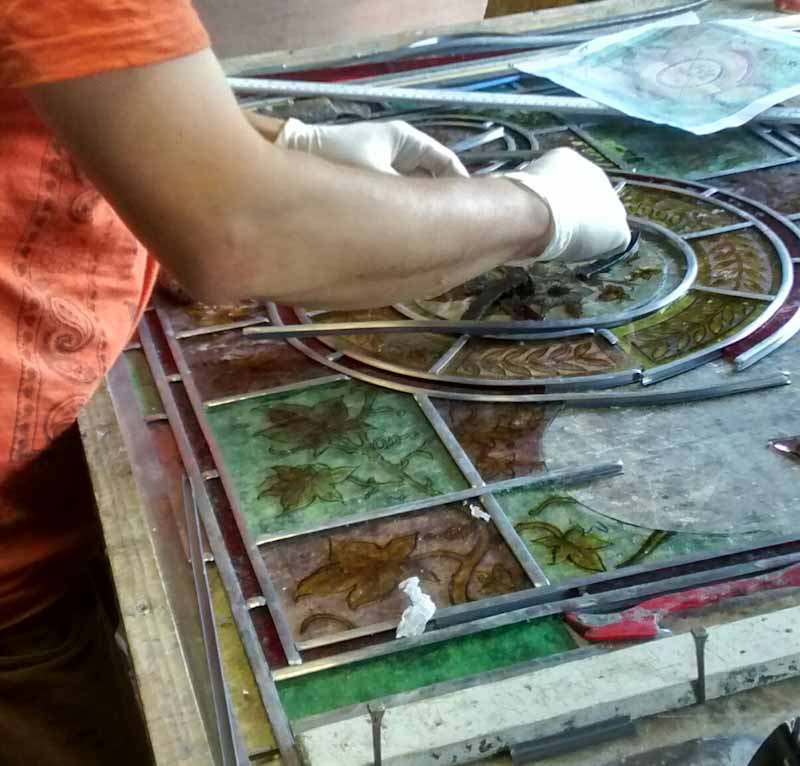
Rebuilding a Streatham door panel that had bowed
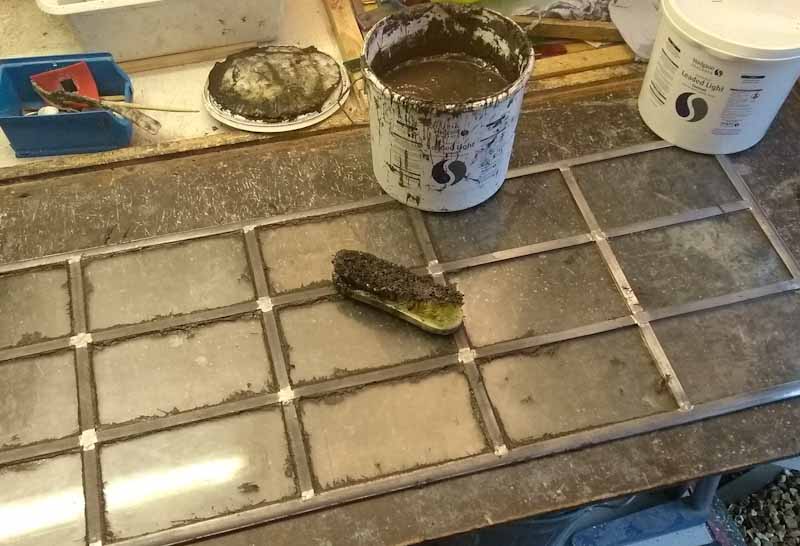
'Cementing' bonds the glass and the lead for rigidity and weather resistance.
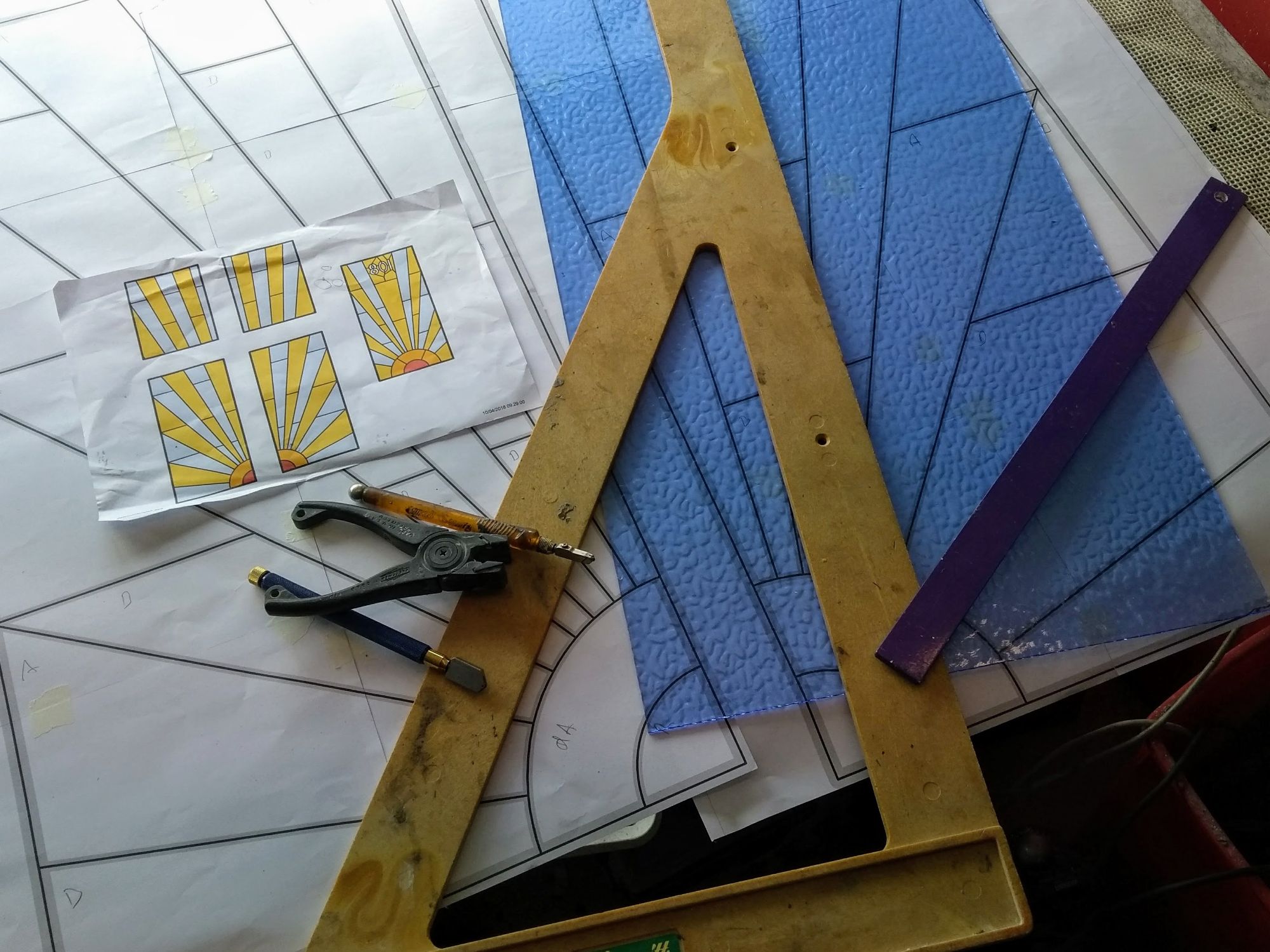
Preparing to cut glass - set to be encapsulated into double glazing
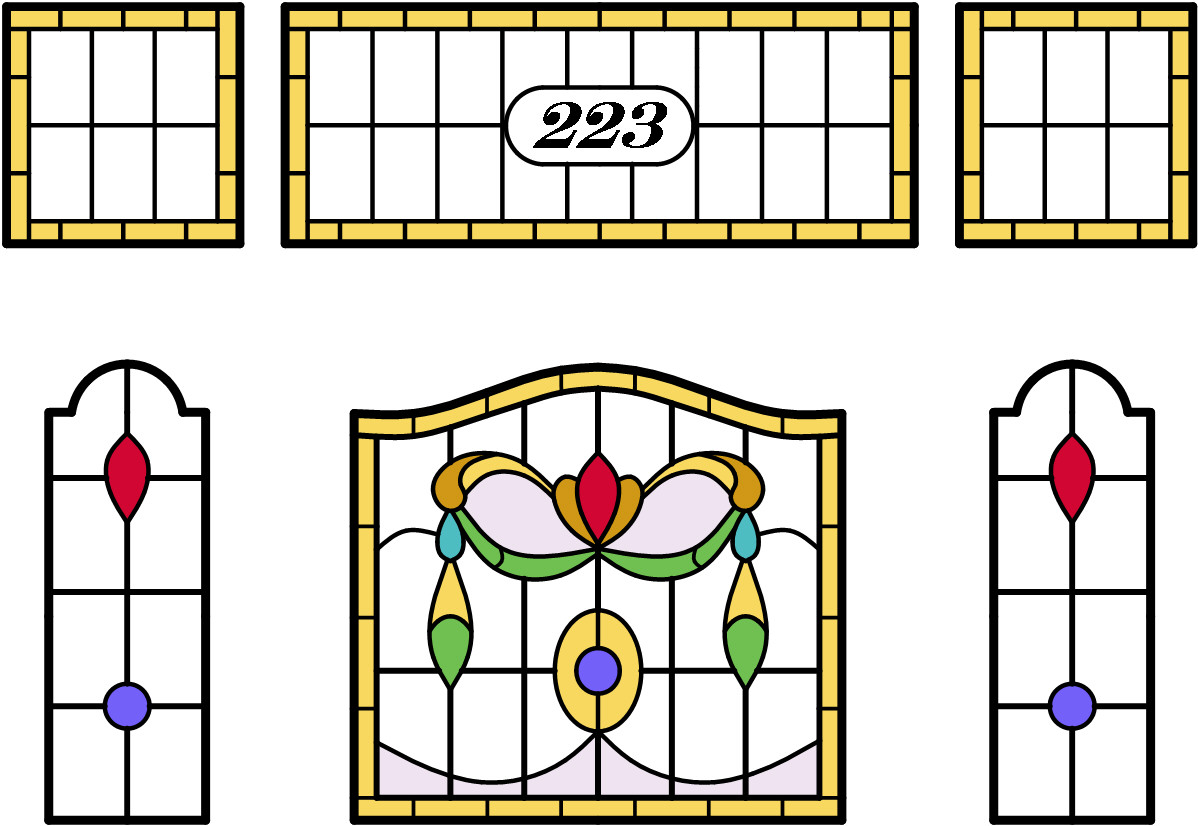
Visual of front door stained glass set for a Streatham client
.jpg)
Lead - in 25kg boxes and various widths and profiles
.jpg)
I dont actually need or use all these glass cutters - they just accumulate!
This work is generally for regular glazing (maybe where you want an alternative to conventional clear obscured glass), or for hanging or standing in front of existing windows, including double glazed units. They are fully weather proof,
but can also be used in interior decoration. We also undertake repairs. we:
- produce new panels to match or complement your existing glass
- work with you and your designs to produce new leaded coloured glass panels
- prepare and execute designs from your ideas and brief
- provide a scaled colour visual drawing for approval
- come up with design ideas for you
- install the finished piece if required (its common for newly installed windows to be backed up with regular or toughened glass for additional security)
We work with the traditional materials of lead cames (or calms) and coloured glass, cut by hand to the design (the cartoon), fitted together (leaded up), the lead joints fluxed (with tallow) and soldered together, cemented in (with a special
putty) and finally finished with blacklead. We sometimes introduce elements using the copper foil technique (for finer detail where the width of the lead stops us achieving this), - often seen in lamps and pioneered
by Tiffany - who also produced windows in this medium. We do not use self adhesive lead strips combined with coloured lacquers to create our work. These are non-traditional methods, often seen in double glazed windows
and casements. They lack the visual impact of the traditional techniques since they use a single usually flat glass, in a rigid plane and much of the reflection and life of a proper leaded pane is lost.
Installation
We usually install the stained glass panels that we manufacture, but we can supply only. We have comprehensive fitting instructions available to our self-fit customers, but it’s not really a DIY job.
Installation of leaded panels behind laminated safety glass affords much greater security, since it is almost impossible to penetrate. It also provides protection to the leaded panel, particularly for busy households. If installed
on the outside – providing maximum deterrent factor, the outer sheet of glass means that the external appearance particularly in daylight is different to an unprotected panel due to reflections.
The area of the frame immediately
around the work on both sides will probably need repainting due to the slight damage occurring as old glass is removed.
Double Glazing, Encapsulation
New windows and doors (essentially when the framework attached to the fabric of the building is repalced) in outside walls are controlled by Building Regulations for (amongst other things) thermal efficiency, and need (along with thermally
efficient framing etc) to be fitted with insulated glass units, suitably installed – they need to be (at least) double glazed. There are also requirements for safety and performance of windows and doors in certain locations, covering
'means of escape', glass breakage and fire resistance. Evidence of compliance with Building Regulations may be via an installer registered under one of the relevant schemes, or by individual inspection and document review by the
Building Control Officer. A regular timber door set into a timber frame is very unlikely to meet the requirements, even if its double glazed.
Our traditionally made leaded panels cannot be used as one of the 2 glass faces of a double-glazed unit. They may be added within the space between the 2 glass faces of a double-glazed unit. They are not sandwiched tight between the 2
outer sheets of glass, rather they ‘float’ in the void, being supported at the edges by pinching the lead ‘tongue’ at the border between the 2 pieces of ‘spacer bar’ that separate the outer panes of glass. The thickness
of the unit is increased over the expected thickness by about 1.5mm due to the lead ‘tongue’ between the spacer bars.
If you are replacing existing leaded lights and stained glass with new windows, it may be possible to remove them and prepare them for fitting within double glazed units. It's very likely they will need to be restored before this
can be done, since they are likley to be dirty, and deteriorated with age, and this usually means they have to be taken apart and rebuilt with new lead. In any event the lead at the border will need replacing. The finished
double glazed units will be a little larger than the original panels because of the width of the 'spacer bar'. In some cases the originals may be reduced in size to compensate for this by cutting down the glass at the margins.
In addition the thickness of the unit is increased over the expected thickness by about 1.5mm due to the lead ‘tongue’ between the spacer bars, so it's important to be sure that the new units will fit into any new glazing
system.
Any double glazed unit has the potential to fail with time and mist up on the inside due to the breakdown of the seal. There is a somewhat greater potential for this when the units are carrying leaded panels. Its unlikley a proper U value for these units could be provided.